Writing & ideas
I wrote Philosoteen, a column about philosophy in everyday life, for the Los Altos Town Crier. I also co-authored Stanford’s winning 2026 policy memo on learning and assessment in the age of AI.
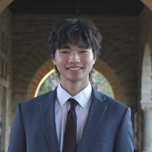
I study economics at Stanford and co‑founded Verdnt Group.
Next summer I’ll join DRW’s central strategy team in Chicago.
I’m also interested in computer science and philosophy, and I like understanding what people value and how they put ideas to use.
I wrote Philosoteen, a column about philosophy in everyday life, for the Los Altos Town Crier. I also co-authored Stanford’s winning 2026 policy memo on learning and assessment in the age of AI.
Co-founded an international platform for young writers and artists, with competitions and print anthologies.
National champion, four-time national medalist, and instructor.
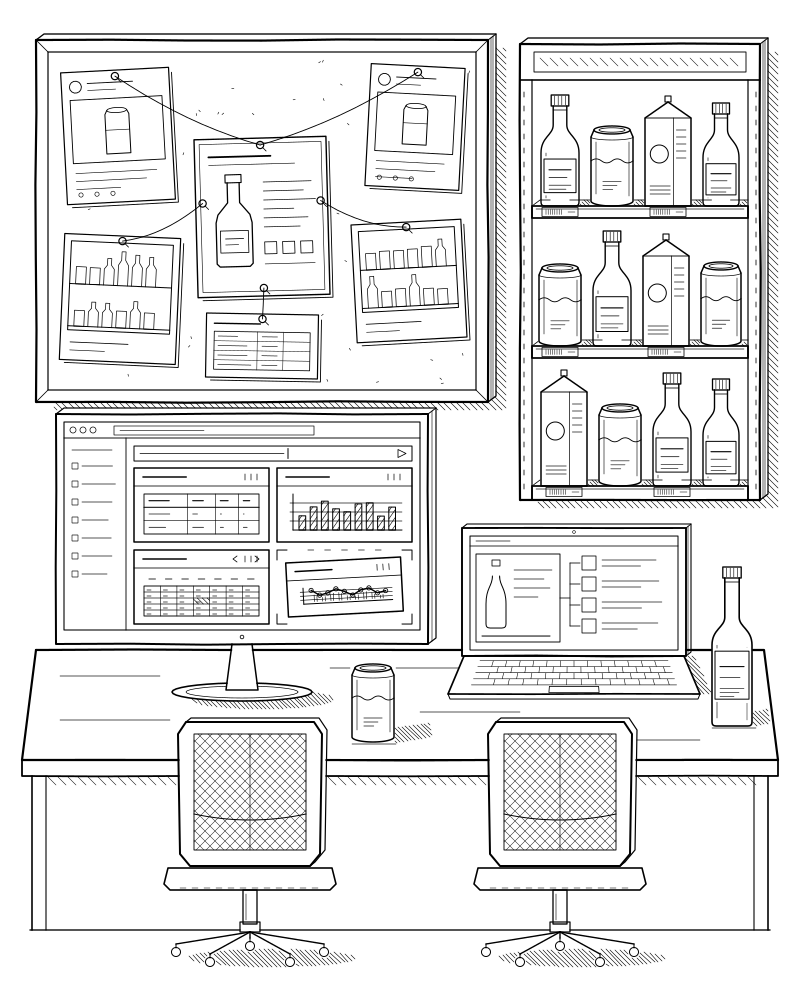
I co-founded Verdnt Group with Diego Sanchez Tirado. We’re building Verdnt Studio, a tool for food and drink teams developing new drinks. The goal is to help them turn market research into product ideas they can test.
Co-founder
Verdnt Studio pulls its research from social media and retail shelves. I work with clients to understand what they need and build the software.
Our client work includes software that combines market research with a company’s product information to suggest new products. Teams can check the sources behind each suggestion before deciding what to test.
I co-founded Trus with Diego Sanchez Tirado to help people create software for their own work. The idea was to describe what you needed and have AI build a workspace for it. Trus is now retired.
Co-founder · Retired
I helped build the first version, where AI assembled workspaces from a set of tables, charts, calendars, and other components we had built.
I later focused on product direction and finding customers, while Diego led the engineering.
I’ll join the central strategy team in Chicago, working with trading desks to assess new business opportunities.
Incoming Strategy Intern · Summer 2027
I researched target customers and positioning for industrial AI software, and built a working quoting-demo prototype.
Strategy Associate · July to September 2026
I worked on wealth-management workflows in Palo Alto, applying agentic AI to portfolio monitoring and client data tracking.
Strategy & Analytics Intern · April to September 2026
I worked on FStea’s college-market positioning and distribution, and modeled production costs.
Go-To-Market Intern · July to September 2025
Led our team’s embedded-treasury proposal and working-capital model. We placed second. Competition results
Case Competition · 2026
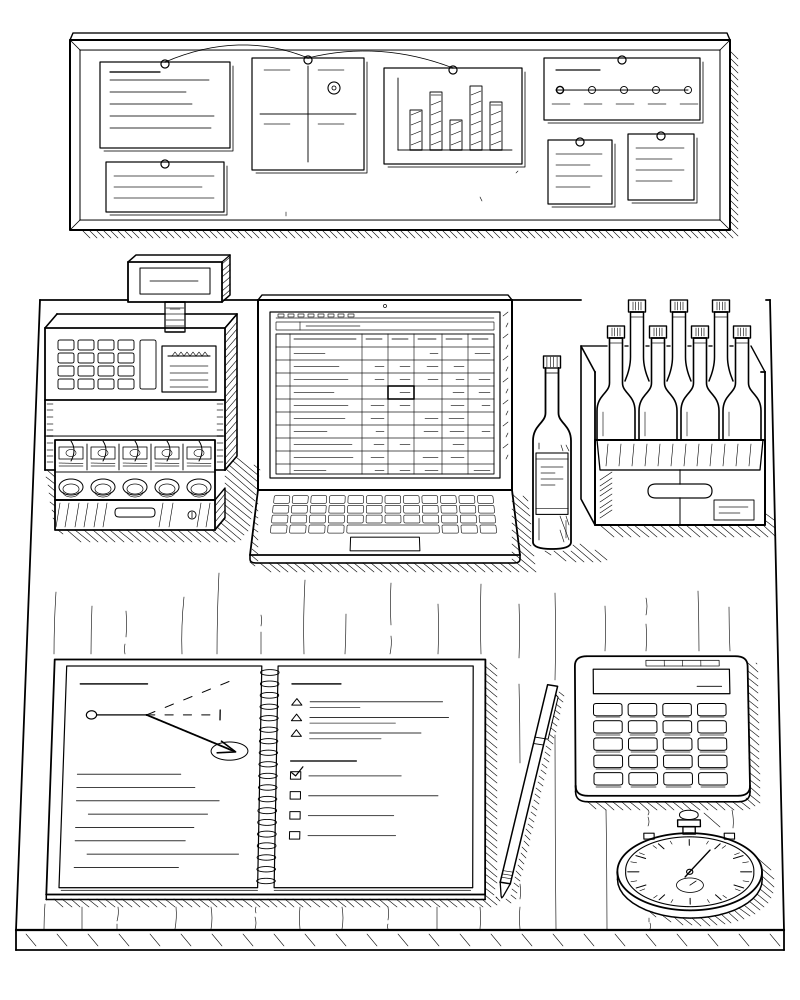
Built a Python regression-based pricing model for B2B customer segments.
Analytics Project · October 2025 to February 2026
HyperPay is a payment processor in a crowded market. We looked at the cash merchants leave sitting idle and pitched a working-capital advance, which the judges liked.
From: HyperPay case competition, 2026
I built Forge, an incubator for student nonprofits, before I knew anyone wanted it, and we had to cut it back. At FStea I pushed for college students as the target customer, because the drink already fit there.
From: Homer Humanities and FStea
I tend to let scope grow, and Trus was a huge, vague idea. We made progress once we worked on one problem first, which was how long each generated piece took to appear.
From: Trus
I rarely have all the data I want when I need to decide, and waiting usually doesn’t fix that. So I pick a path and say why. Then I note the risks and what I’ll check next.
From: my interview notes, and economics
At FStea I kept a spreadsheet with a row for every campus store that sold the drink, so the team could see which moves were working. Before comparing prices, I check whether each one is per case or per bottle.
From: FStea, 2025, and Verdnt client work
I do my best work as a reliable teammate whether or not I’m the one in charge. With the Ethical Culture Society, I wrote cards, made sandwiches and helped with donation drives.
From: volunteering in Silicon Valley
I want work carried through to a usable result. When I give an agent a task, I expect it to finish the work and check the result before coming back to me.
From: how I run my agent fleet
I expect an agent to check what it tells me against the actual system and my earlier decisions. A report from another agent needs that check too.
From: the feedback I give my agents
When I change a rule, I want the tools and instructions around it updated too. I ask my agents to find what that change makes stale, including work already in the queue.
From: changing rules across connected workflows
I want a straight answer when something fails, with enough evidence to understand why. I also want to hear when an idea isn’t worth doing.
From: the working style I ask of my agents
I am willing to change the architecture when the output needs it. I ask for experiments and want a change reverted if the result gets worse.
From: iterating on AI systems
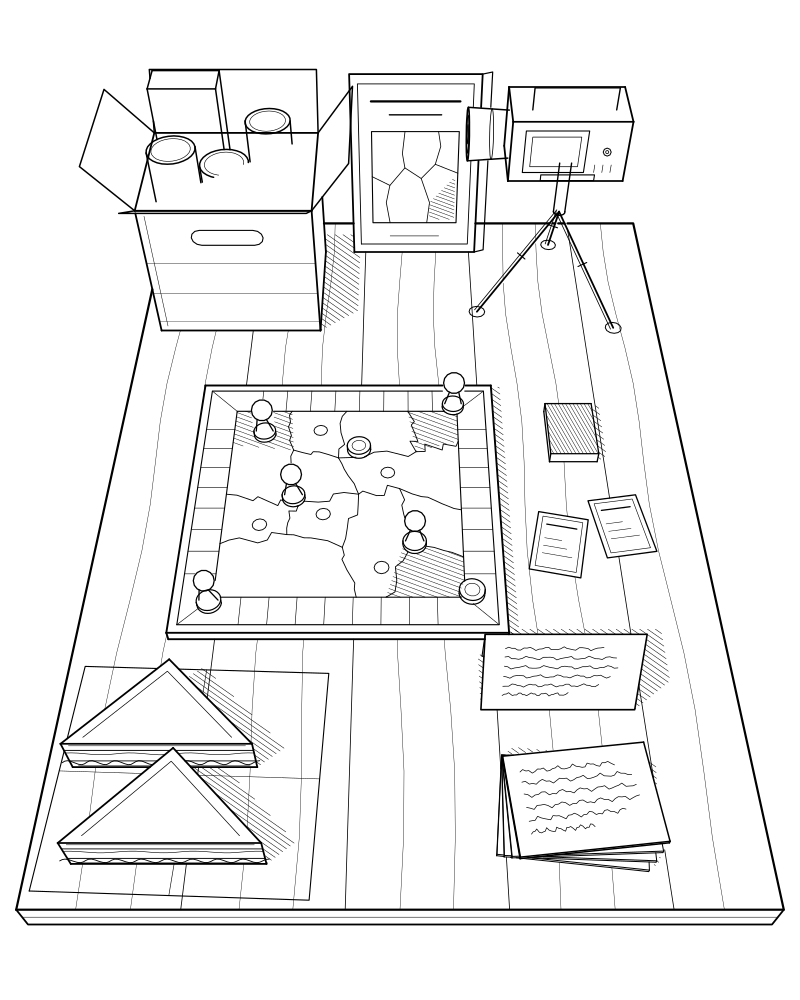
The rule in Statesman, my board game, is “no fate, only action and reaction.” I think about my own choices roughly the same way. My philosophy essays keep coming back to the idea that a choice can be voluntary and still be shaped by past experience. Schopenhauer wrote, “Man can do what he wills but he cannot will what he wills.”
From: Statesman and my essays on free will
I go through a spreadsheet the way I went through my students’ sparring rounds when I coached karate. I filmed each round and watched it technique by technique, looking for the one thing to fix.
From: coaching at Okaigan Karate
When I wrote it down, I listed the people close to me, my health and the work.
From: a note to myself, 2026
On my own time, I run a small team of AI agents that handle my coding and notes.
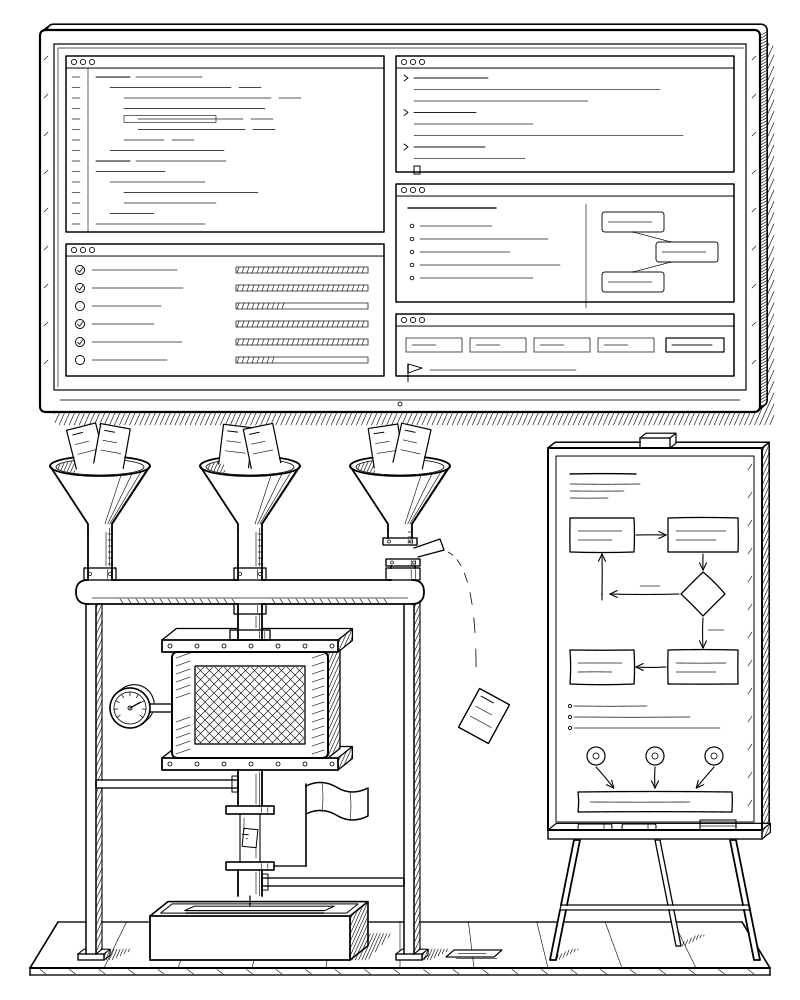
I run my agents with a supervisor and workers assigned to specific tasks. Each worker gets a separate copy of the project to work in, so concurrent changes stay isolated.
From: how my agent fleet is organized
I route difficult or ambiguous work to stronger models and use lighter ones for small, clear tasks. If a simple task fails verification twice, I move it to a stronger model.
From: the routing rules for my agents
When I ask for an end-to-end test, I mean following real items from every input to the final output. I want the counts at each step to explain where items ended up, including anything held or rejected. Empty or broken inputs need checking too.
From: tightening my pipeline tests
I ask agents to prove UI changes by using the app through its actual interface. Before a change ships, they need to follow the project’s verification steps and show that the behavior works.
From: how I verify product changes
I want bots to handle routine dashboard steps they can do themselves. I keep the questions that involve unclear goals or real tradeoffs.
From: deciding what to automate
I keep decisions and project context in files that agents can consult. I also ask for a current handoff so another tool can pick up the work when I switch.
From: moving work between agent tools
In a quoting product, a wrong answer costs real money. A language model is good at reading a messy part description, so it does that part. The pricing math is plain code, with a check that flags when something went wrong.
From: Camber, 2026
A model can sound sure and still be wrong, so I don’t let its confidence alone decide whether something ships. When the demo gets a deliberately vague request, it answers “REVIEW REQUIRED.”
From: the Camber homepage demo
At Morgan Stanley, the agents I built were only useful once analysts understood how they worked. I spent as much effort explaining them to non-technical colleagues as I did on the code. At Verdnt, every suggestion shows its sources.
From: Morgan Stanley and Verdnt Group
Almost every bug in the job-search pipeline I built was a silent drop. A source broke or a filter was too strict, and a real posting never showed up. Reading the results didn’t catch these, so I started checking for postings that should have been there.
From: a personal automation project, 2026
I want to build AI that helps people do more. In the winning Stanford policy memo I co-wrote, our part proposed short in-person checks where students explain their reasoning out loud.
From: philosophy coursework and the Stanford memo, 2026
I like clean interfaces where I can tell what the product does. I want the visual style to make the next action easy to find.
From: the feedback I give on app design
I ask to see substantial plans visually, with annotations. When something needs my judgment, I want clear options and a recommendation so I can see the tradeoff.
From: how I review plans and decisions
I ask for writing that gets to the point and sounds like a person. I want the result explained first, with the details needed to understand it.
From: my instructions for writing and agent replies
I treat the phone layout as its own design problem. I want the content to stay usable when motion is reduced or JavaScript is off.
From: building this site
Books I’ve read and still think about.
Elena and Lila have no family or legal tie, and they keep choosing to stay friends. Ferrante gives a lot of weight to what they leave unsaid.
Elena Ferrante · my favorite novel
Sluga asks how to make good decisions without the full picture, especially in politics with a lot of misinformation around. Economics raised the same question for me.
Hans Sluga · I helped research and edit it
I read it in weekly meetings across a desk from Professor Sluga. He always had another question, so I made sure I’d done the reading before I came in.
Friedrich Nietzsche · read with Hans Sluga
I helped build more than 200 pages of material for Sluga’s graduate seminar on it. I broke hard ideas into steps a graduate student could follow.
Michel Foucault · seminar material
I read them side by side for a Stanford writing class, and I still don’t know what merit should be. In all three, institutions keep changing what counts as merit, and the definition decides who wins. Kirn also writes about the gap between performing competence and having it.
Sandel, The Tyranny of Merit · Markovits, The Meritocracy Trap · Kirn, Lost in the Meritocracy
Statesman, the board game I designed, is based on Plato’s city run by philosopher-kings. I also still think about the allegory of the cave and the case for the examined life.
Plato · UChicago summer program, 2022
The Bookshelf has 20 suggested reads in philosophy and business, sorted into tiers.